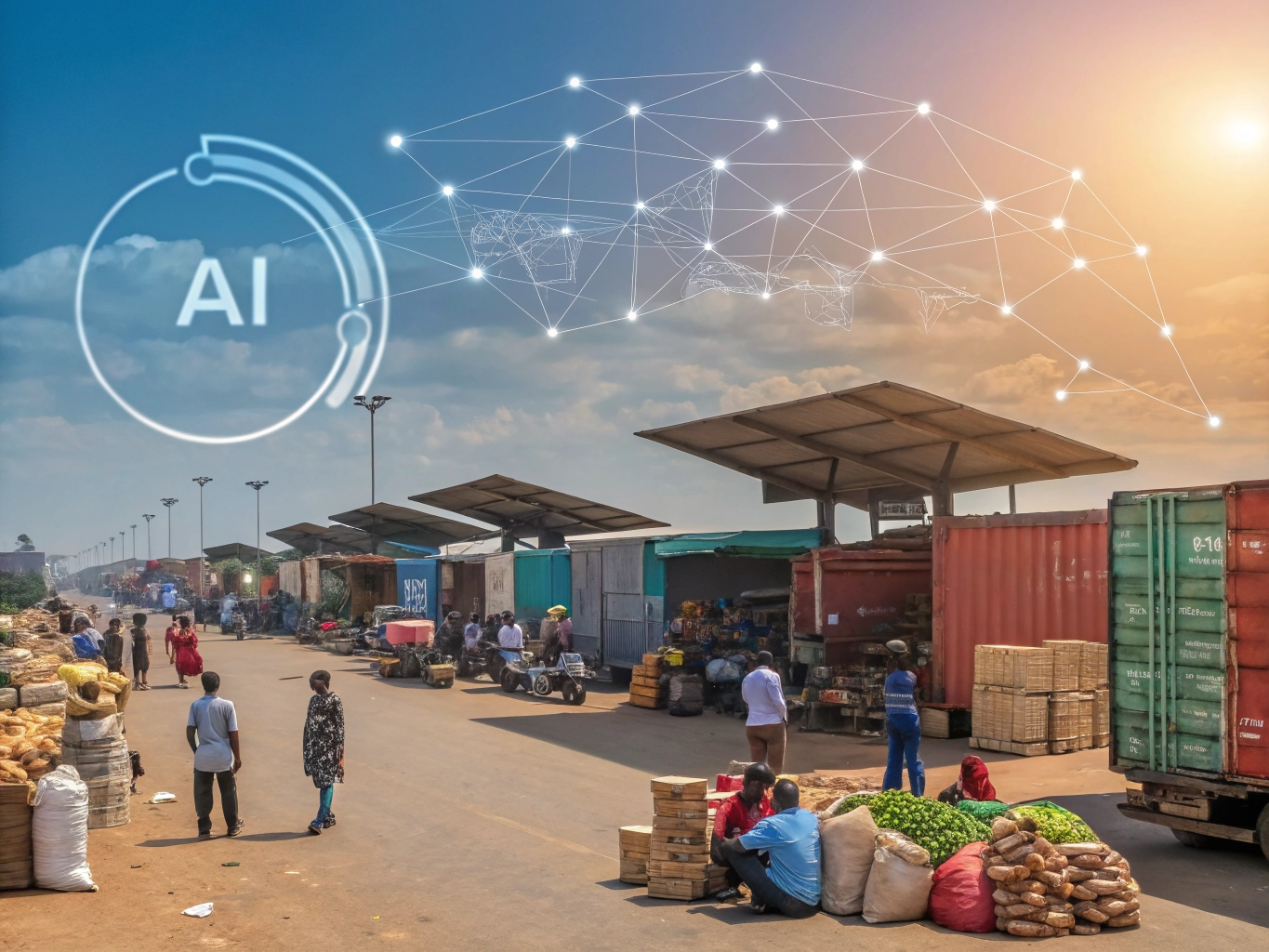
Put two things in the same room: AI and the everyday work of moving goods across African borders. On paper, they belong together. Trade is drowning in rules, and AI is supposed to be good at rules. A trader sending goods from Lagos to Nairobi crosses several legal systems that were never written to agree with one another. A machine that could read all of them at once, and simply tell you the path through, would be worth a fortune to this continent.
So why hasn’t it happened? Because the AI we have been handed does not actually read the rules. It guesses.
Today’s trade and legal AI works by pattern. It has read enormous amounts of text, mostly from one part of the world, and it predicts the answer that looks most likely. That works until it meets something unfamiliar. Show it a product certified to a Nigerian or Chinese standard, and it does not recognise the standard. It flags a problem that isn’t there. The paperwork is different, not wrong, but the machine cannot tell the difference. At a border level, that confusion is expensive. A wrong answer can cost a business its shipment and thousands of dollars.
This is not a glitch that a better version will fix. It is built into how the tool thinks. A system trained on one country’s rulebook, sent into a continent of more than fifty countries, will stumble at every border by design. And borders are exactly where African trade already struggles. We buy far less from each other than we could, and a large part of the reason is friction, the gap between one country’s rules and the next. The new free trade area was meant to close that gap. But the wrong technology will quietly widen it.
There is a better way to build the machine, and it starts from a surprisingly old idea. When legal traditions that grew up far apart, in different centuries, on different continents, arrive at the same principle on their own, that agreement means something. It is not one culture’s opinion. It is something closer to a shared human answer.
Take a simple rule of fair partnership: share the effort, share the risk. It shows up on its own in Islamic finance, in medieval Venetian trade, in the Yoruba ajo, in Chinese business custom, in modern venture capital, traditions that never copied one another. That is not coincidence. It is convergence. And convergence can be measured.
A machine built on convergence behaves differently. It does not invent a confident answer; it reasons from principles that many traditions already share, so there is nothing to fabricate. It is most sure where the world’s legal systems agree, and it warns you exactly where they part ways, which is the moment a trader most needs the warning. Best of all, because it reasons from shared principle rather than one country’s data, it works even in markets that no Western tool has ever studied, including African systems where common law, civil law, Islamic law and local custom all live side by side.
Return to that Lagos shipment. The old tool sees an unfamiliar African standard and raises a barrier. The convergent tool sees that both countries are asking the same underlying question: is this product safe, and simply lines up the paperwork to answer it. One machine closes the door. The other opens it.
This is the choice in front of us. Africa does not need imported tools that treat our standards as mistakes. It needs intelligence built for the world as it actually is: many systems, each respected, the common ground found from the ground up. The traditions of the world have already agreed on more than we think. Build on that agreement, and technology stops guessing at Africa’s borders and starts opening them.