
Newsletters

legal opinion
Legal

FROM ENTRY TO EXIT: A LEGAL AND REGULATORY FRAMEWORK FOR DE-RISKING PRIVATE EQUITY INVESTMENTS IN NIGERIA

Private equity sponsors investing in Nigeria must navigate a multi-layered regulatory framework across corporate, competition, tax, and foreign exchange laws. De-risking investments requires selecting the right onshore or offshore entry vehicle, choosing appropriate debt or equity instruments, and strictly completing regulatory housekeeping from Corporate Affairs Commission filings and electronic Certificates of Capital Importation to relevant sector approvals to safeguard downside protections.


Read More
opinion
Opinion

NIGERIA CONSUMER PRICE INDEX – AUGUST 2026

Nigeria’s inflation picture strengthened modestly in August 2026, with headline inflation easing marginally to 15.39% year-on-year from 15.43% in July. Month-on-month inflation slowed sharply to 0.71%, while annual food inflation dropped to 19.57%. Core inflation moderated to 13.29% YoY and entered slight monthly deflation at -0.06%, highlighting a broader slowing in price momentum across key economic sectors.

Read More
opinion
Opinion

GBI-EM Edge: Africa and Nigeria’s Re-entry into Global Local-Currency Debt

The launch of J.P. Morgan’s GBI-EM Edge index, worth US$328 billion, formalizes investment in frontier local-currency debt. For Nigeria, this is a critical re-entry into a global benchmark with a significant 7.40% weighting. The move promises deeper liquidity and lower funding costs for Africa’s largest economy, provided it can maintain FX liquidity and macroeconomic credibility, connecting local debt to global portfolios.

Read More
weekly review
Market Review

Weekly Market Review: Restrictive Rates and Selective Repricing

Nigeria’s financial markets saw strong fixed-income demand drive yield compression across OMO and treasury bills despite a 43.07% drop in system liquidity. The Naira appreciated to $/₦1,326.52, while the equities market declined 1.88% due to pre-IPO repositioning. Globally, sticky inflation and higher yields pressured markets as crude oil surged on Middle East supply concerns.

Read More
esg
ESG

ESG MOVES FROM DISCLOSURE TO CAPITAL, COMPLIANCE AND EXECUTION

The ESG landscape is shifting from simple disclosure to active compliance, capital allocation, and operational execution. Anchored by domestic developments like green skill building in Nigeria and global trends linking climate exposure directly to financial risk, sustainability is no longer just a corporate messaging tool, it has become core market infrastructure driving investment, supply chain access, and corporate accountability.

Read More
Opinion

EXECUTIVE BRIEF: NIGERIA FOREIGN TRADE PERFORMANCE (Q2 2026)

Nigeria’s total merchandise trade reached ₦41,444.89 billion in Q2 2026, marking a 5.61% year-on-year increase driven by strong domestic exports and reduced import costs. The country’s merchandise trade surplus doubled to ₦12,596.86 billion. Increased local refining capacity significantly lowered fuel import reliance, though agricultural trade deficits and persistent inflationary risks remain key macroeconomic concerns.

Read More
weekly review
Market Review

Weekly Market Review: Nigeria’s Financial Markets Gain Momentum on Stronger Growth, FX Stability and Investor Demand

Nigerian financial markets entered September 2026 with strong momentum, driven by 4.43% Q2 GDP growth, Naira appreciation to $/₦1,321.22, and rising foreign reserves. Easing fixed-income yields and sustained primary auction demand reflect high investor conviction. Meanwhile, the NGX ASI rose 2.36% WTD ahead of Nigeria’s return to the FTSE Russell Frontier Market index.

Read More
g20
Opinion

G20 2026: NAVIGATING GLOBAL GROWTH, DEBT AND FINANCIAL FRAGMENTATION

The G20 Finance Ministers and Central Bank Governors meeting in Asheville focused on boosting global potential growth, managing public debt, and strengthening fiscal resilience. With disinflation stalling and economic fragmentation growing, key discussions centered on debt restructuring frameworks, non-market trade policies, cross-border payment integration, and regulatory frameworks for emerging financial innovations such as artificial intelligence and digital assets.

Read More
opinion
Opinion

NIGERIA’S Q2 2026 GDP: GROWTH ACCELERATES, BUT INDUSTRIAL WEAKNESS PERSISTS

Nigeria’s real GDP grew by 4.43% year-on-year in Q2 2026, up from 3.89% in Q1, driven by non-oil sector strength in agriculture and services alongside higher crude output. However, persistent contractions in electricity supply and sluggish manufacturing performance underscore ongoing structural challenges, highlighting the need for sustained industrial policy support to secure long-term stability.

Read More
opinion
Opinion

The Cost of Eating Well: Why Nigerians Need a Protein Savings Plan

As food inflation drives up the cost of essential proteins like fish, Nigerian households are forced to reduce portions and sacrifice nutritional quality. Rather than simply settling for cheaper substitutes, creating a dedicated “protein savings plan” a daily or weekly sinking fund can help families consistently afford nutritious, high-protein meals despite rising market prices.

Read More
weekly review
Market Review

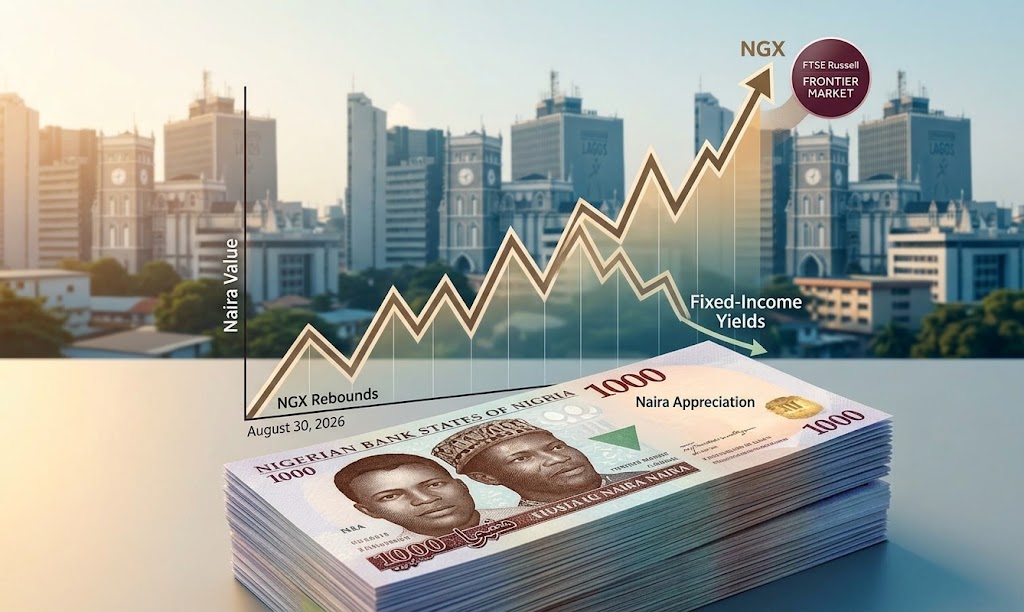
Weekly Market Review: Naira Strengthens, Fixed-Income Yields Ease and NGX Rebounds on FTSE Reclassification

Nigerian markets saw a significant shift in August 2026. The Naira strengthened, while fixed-income yields eased on strong primary market demand. Concurrently, the equities market rebounded on news of Nigeria’s return to the FTSE Russell Frontier Market status. This combination of factors led to a more selective investor approach, moving towards defensive assets, liquidity, and yield in a cautious global environment.

Read More
weekly review
Market Review

Weekly Market Review: Fixed-Income Resilience Amid Easing Inflation and Global Risk Pressures

Nigeria’s domestic market showed cautiously constructive sentiment as easing headline inflation and strong FGN bond auction demand reinforced the case for gradual fixed-income yield compression. While food price acceleration and profit-taking in equities indicate an uneven recovery, improved foreign exchange stability and abundant liquidity provide a supportive foundation for local fixed-income assets amidst persistent global risks and oil price volatility.

Read More