

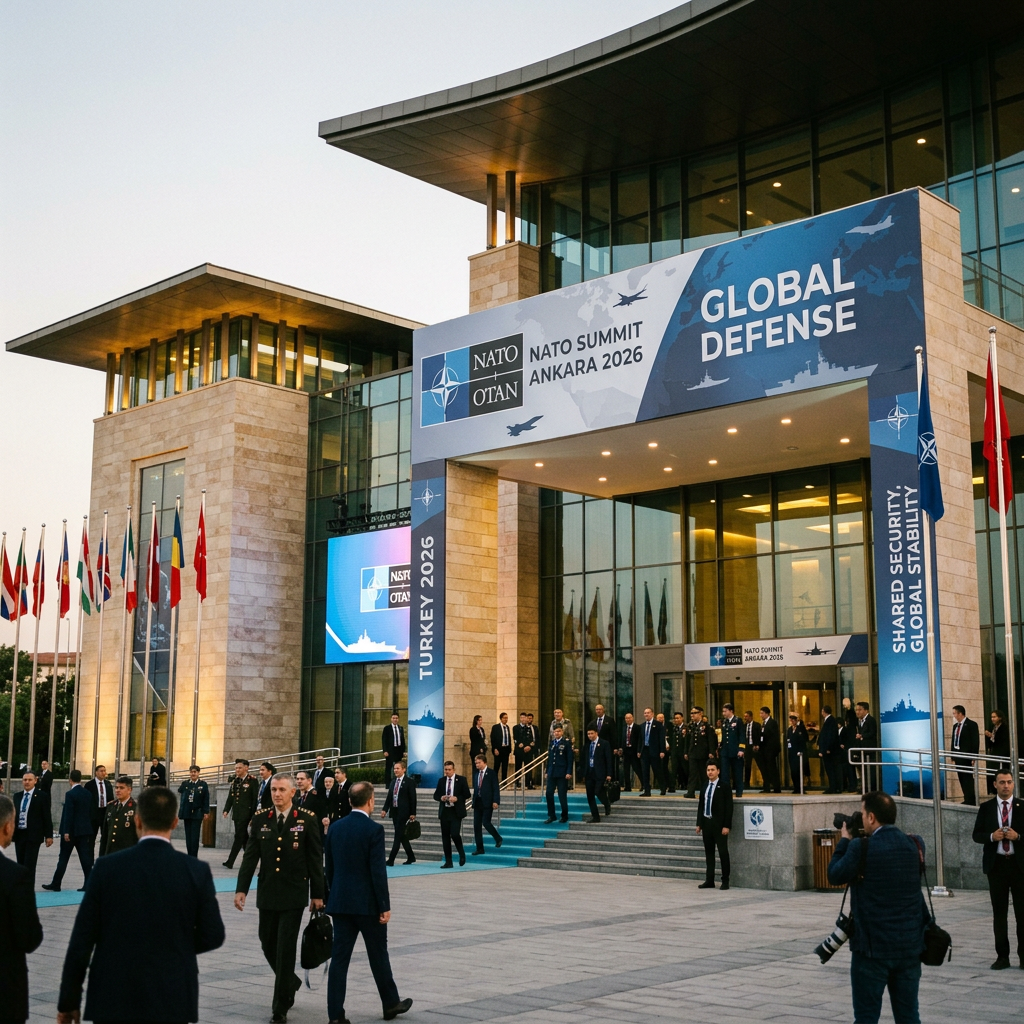
July 2026, Edition 2
The July 07 – 08, 2026 NATO Summit in Ankara, Turkiye marked the formal operationalization of “NATO 3.0,” a structural evolution defined by aggressive defence industrialization, massive capital injections into autonomous military ecosystems, and a rebalancing of regional security responsibilities. Spurred by evolving geopolitical friction points and sharp internal debates on burden-sharing, NATO Allies have collectively accelerated core security spending to an unprecedented 4% of GDP, establishing a firm path toward 5% by 2035.
For Nigeria and the broader African continent, this move offers critical insights. As African states grapple with shifting asymmetric threats, fragile regional alliances, and a historical reliance on foreign military hardware, the Ankara Summit provides a definitive blueprint for modern defence economics, statecraft, and collective security.
Domestic Production Over Transactional Procurement: A primary takeaway from the Ankara Summit is the decisive shift from setting abstract spending targets to delivering hard industrial output. The summit recorded over $50 billion in new procurement deals executed in a single day, intentionally driving capital directly into the domestic industrial bases of member nations.
For decades, African militaries, including Nigeria’s, have operated on an import-dependent, transactional defence procurement model. This leaves sovereign states highly vulnerable to supply chain bottlenecks, foreign political embargoes, and volatile currency fluctuations.
Strategic Imperative: True sovereignty cannot be sustained on imported munitions. Nigeria must transition from a buyer to a builder by revitalizing the Defence Industries Corporation of Nigeria (DICON) through improved public-private partnerships. African states must institutionalize domestic defence manufacturing to insulate their national security from global supply disruptions.
The Alliance announced the launch of NATO’s Drone Edge, a massive $40 billion initiative dedicated entirely to uncrewed systems over the next five years, alongside the integration of advanced AI models into an interoperable transatlantic warfighting cloud.
This commercial and strategic shift mirrors the exact needs of African theatres. The combat environments in the Sahel, the Lake Chad Basin, and Nigeria’s internal security corridors are fundamentally uneven, characterized by highly mobile, decentralized non-state actors (insurgents, bandits, and maritime pirates).
NATO 3.0 Strategic Framework | Core Operational Mechanics | African / ECOWAS Application |
Aggressive Fiscal Scaling | Reaching 4% of GDP instantly, targeting 5% by 2035. | Shift defence spending from an isolated budget sinkhole into an engine for domestic industrial growth. |
“Drone Edge” Initiative | $40B dedicated allocation for uncrewed systems and AI cloud. | Prioritize low-cost, locally manufactured tactical drones over cost-prohibitive legacy platforms. |
Logistical Modernization | €27B fuel pipeline and supply chain infrastructure overhaul. | Treat energy security and secure supply corridors as critical front-line operational requirements. |
Alliance Rebalancing | Regional partners assuming primary security burdens. | Reduce reliance on foreign superpowers; build autonomous, fully funded regional standby forces. |
Rather than exhausting limited national budgets on cost-prohibitive, multi-role conventional fighter jets that require extensive foreign maintenance, African defence frameworks must prioritize low-cost uncrewed aerial vehicles (UAVs), localized drone manufacturing, and AI-driven signals intelligence.
Supply Chain Resilience as a Core Deterrent: In a move highlighting the changing nature of modern conflict, NATO announced a historic €27 billion investment to fully modernize its fuel storage and distribution network, extending critical pipeline infrastructure toward its eastern flank to ensure long-term “warfighting readiness.”
In the African context, military campaigns are routinely hamstrung not by a lack of personnel valour, but by systemic logistical failures. Fuel diversion, poorly secured supply routes, and deficient field maintenance undermine active operations against insurgencies. Security planning must treat logistics, energy pathways, and supply chain security as foundational elements of combat readiness rather than backend administrative tasks.
Rebalancing Regional Responsibility: The doctrine of NATO 3.0 mandates that European nations and Canada assume significantly greater financial and operational responsibility for their own immediate neighbourhoods, reducing direct, singular dependence on the United States. A move from a legacy security model to a modern sovereign model is important.
The legacy security model is characterised by heavy import dependence, bloated conventional hardware, and fragile/underfunded regional pacts
Modern sovereign model ensures domestic industrialization, agile and uncrewed AI systems, and autonomous regional sovereignty.
This structural rebalancing is exactly what is required within the Economic Community of West African States (ECOWAS) and the African Union (AU). The reliance of various African states on external security architectures, whether Western military interventions or Russian private security contractors, creates fragile and conditional security environments. As the economic anchor of West Africa, it is essential for Nigeria to lead a structural overhaul of the ECOWAS Standby Force, ensuring that local coalitions are independently financed, logistically self-sufficient, and capable of securing regional borders autonomously.
Managing Internal Friction within Alliances: The Ankara press briefing revealed intense internal friction among NATO members, ranging from bilateral disputes over Arctic strategy to public criticisms regarding defence spending disparities. Yet, the consensus from leadership was clear: transparent, democratic friction ultimately strengthens an alliance.
This carries a profound lesson for African regional blocs currently experiencing historic institutional strain, including the recent geopolitical fractures within ECOWAS and the Sahel. Political disagreements and competing national interests are natural dynamics within any multilateral alliance. The presence of diplomatic friction must not lead to the abandonment of collective security pacts. African states must build resilient institutional mechanisms that can withstand political turbulence while maintaining a unified front against shared security threats.
To adapt to the reality of the global defence shifts demonstrated at the 2026 Ankara Summit, Nigeria and its regional partners should implement a three-pronged strategic move:
Tags:




Subscribe now to keep reading and get access to the full archive.