

Period: June 10 – 17, 2026
The digital asset market spent the week trapped in a high-stakes tug-of-war between constructive geopolitical developments and looming macroeconomic anxieties. On the macro front, the U.S. May 2026 Consumer Price Index (CPI) print on June 10 landed at 4.2% year-on-year. (marking a three-year high) due to trailing energy shocks, a softer-than-expected Core CPI print of 2.9% (+0.2% MoM) brought a sigh of relief to a market battered by a brutal early-June drawdown.
A sharp mid-week relief rally was further fueled by headlines of a landmark US-Iran peace framework over the weekend, which immediately triggered plans to reopen the Strait of Hormuz and eased global risk-off sentiments. However, the bounce stalled as all eyes turned to the critical June 16–17 Federal Open Market Committee (FOMC) meeting. Under incoming Chair Kevin Warsh, who is widely expected to revamp Fed communications and potentially retire the quarterly “dot plot,” the market is bracing for a highly anticipated monetary policy stance, leaving major digital assets consolidating tightly at key technical spin points.
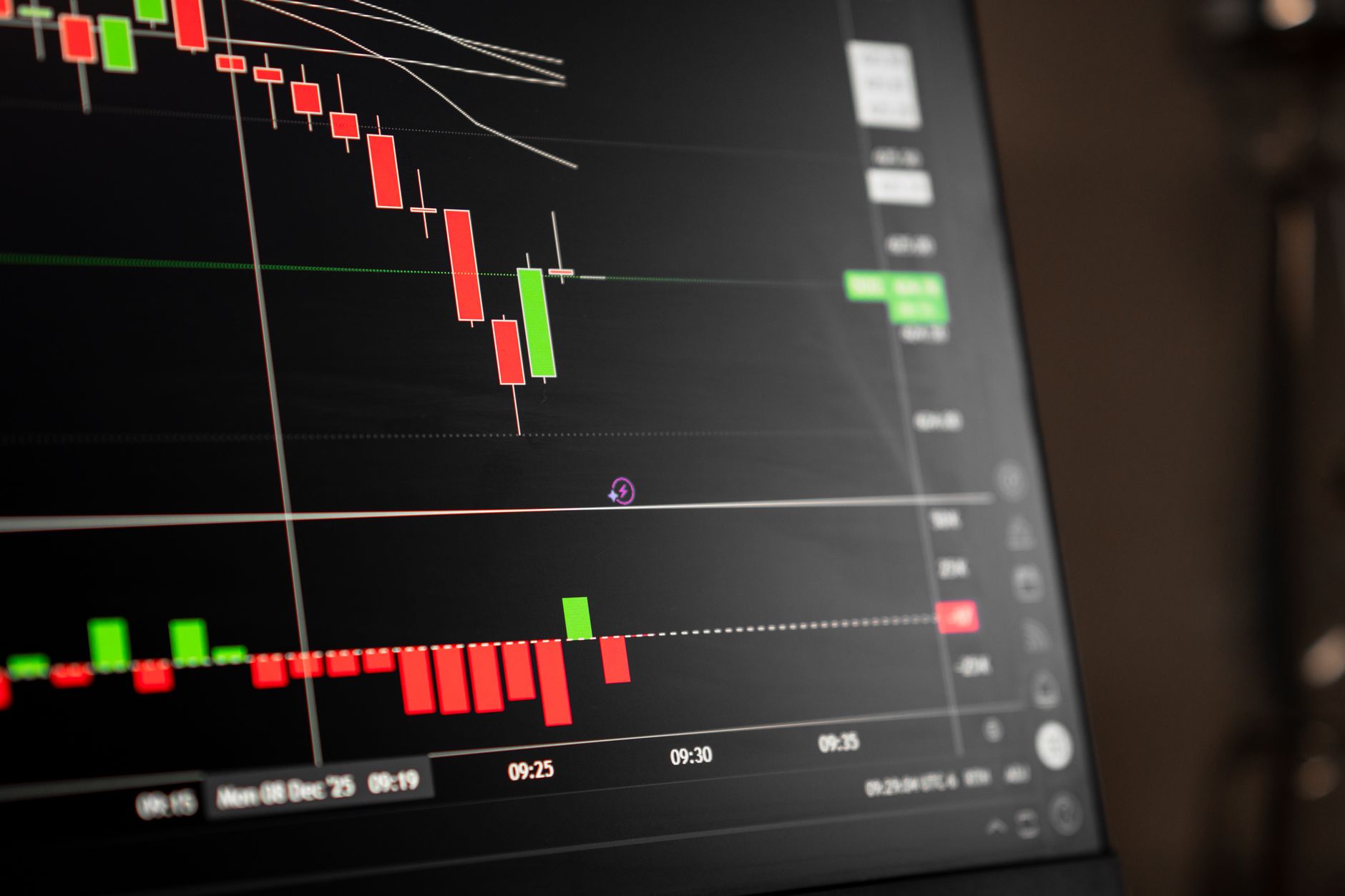
Following an early-June capitulation to a local trough of $61,500, sparked by a grueling exchange traded-fund (ETF) outflow streak and macro anxiety, BTC found solid footing post-CPI. Fueled by the geopolitical breakthrough over the weekend, the asset staged a recovery from the $61,500 liquidity pocket to press against a high of $67,200.
As of June 17, profit-taking and pre-Fed nerves have caused BTC to pull back slightly, consolidating around $65,800. Daily relative strength indicators (RSI) are flashing modest recovery signs, and on-chain metrics hint at a structurally oversold zone, though the immediate tape remains heavily dependent on Warsh’s afternoon press conference.
ETH has faced a painful structural trend, down roughly 32% compared to Bitcoin’s 11% drawdown from recent highs, draging the ETH/BTC ratio down to a multi-month low of approximately 0.027. This underperformance has been driven by persistent spot ETF outflows, Layer-2 revenue cannibalization of Layer-1 fee burns, and the minor pushback of the Glamsterdam upgrade’s mainnet activation to late Q3.
Despite these headwinds, long-term holders are aggressively absorbing the sell pressure; massive tranches of ETH were pulled off major exchanges into self-custody in early June, and over 33% of the circulating supply remains locked in staking. Technically, ETH successfully defended a critical breakdown past the $1,760 zone, staging a modest mid-week bounce back to trade at $1,813.
Altcoins have borne the brunt of the mid-2026 liquidity crunch, acting as hyper-reactive proxies to the broader tech and semiconductor pull-backs.
Beyond the historic SpaceX (SPCX) IPO, which priced on the Nasdaq at $135 per share to execute a record breaking $75 billion capital raise before closing its opening day near $161, and quickly surging past $200 yesterday as enthusiastic retail and institutional investors flooded the market, the digital asset ecosystem experienced several regulatory and structural shifts.
The market’s immediate trajectory relies almost entirely on the outcome of the June 17 FOMC statement and Chair Kevin Warsh’s debut press conference.
The Bullish Case (BTC $70k / ETH $2k+): The Federal Reserve signals through its Federal Open Market Committee (FOMC) that sticky headline inflation is transitory due to the resolving Middle East conflict, telegraphing policy flexibility for later in 2026. Concurrently, the formal signing of the US-Iran peace deal on Friday solidifies, driving energy prices lower and lifting the global “risk-on” appetite.
BTC: Breaking and holding past the immediate $67,200 wall will trigger an aggressive short squeeze through thin overhead volume, pushing prices back toward the $68,000 – $70,000 psychological resistance zone.
ETH: A pause in the spot ETF bleed combined with macro relief clears the path for a rapid mean-reversion move, driving ETH past its local resistance band straight into the $1,950 – $2,040 liquidity zone.
Altcoins: Expect a textbook relief rally led by top-tier majors (like SOL), heavily outperforming BTC on a percentage basis over a 72-hour window.
The Bearish Case (BTC $58k / ETH $1.5k): Should the FOMC deliver a hawkish surprise, with Warsh leaning into his reputation as an inflation hawk, explicitly signaling that benchmark rates may need to remain “higher-for-longer” into 2027 to cool core pressures.
BTC: Immediate rejection at the $66,000 level. Panic selling likely forces a clean break of the $61,500 support floor, exposing a deep retest of the critical macro baseline at $58,000 – $60,000.
ETH: Institutional capital resumes its flight from smart-contract platforms. ETH would likely lose its current $1,770 anchor, slipping past the $1,650 structural defense line to threaten a clean flush of its $1,500 swing low.
Altcoins: Severe illiquidity. Devoid of an institutional bid, altcoin order books will thin out drastically, risking another 15-25% haircut across the board as capital retreats to the safety of stablecoins and tokenized treasuries
Looking ahead, this development signals a structural shift where cryptocurrencies no longer hold a monopoly on speculative retail capital, forcing digital assets to mature beyond pure hype to compete with tangible, high-growth alternatives like aerospace and enterprise artificial intelligence. As mainstream markets increasingly cater to retail investors through blockbuster tech offerings and high-leverage pre-IPO derivatives, the crypto sector faces a tighter liquidity environment that will likely suppress explosive retail-driven bull runs. Consequently, the future of crypto will rely less on erratic retail speculation and far more on institutional stability, clear global regulatory frameworks like the EU’s MiCA, and localized, real-world utility, such as the booming cross-border stablecoin corridors sweeping through emerging markets.
By: Sandra A. Aghaizu
The carnival lights begin to fade,
As traders wander to newer fairs.
Yet beneath the noise, a river remains,
Carving its path through stone and time.
No longer fed by passing storms alone,
It gathers strength from deeper springs.
And where the current serves a purpose,
The river finds its course to the sea.





Subscribe now to keep reading and get access to the full archive.