
Part 7: Smart Money in Cryptocurrency
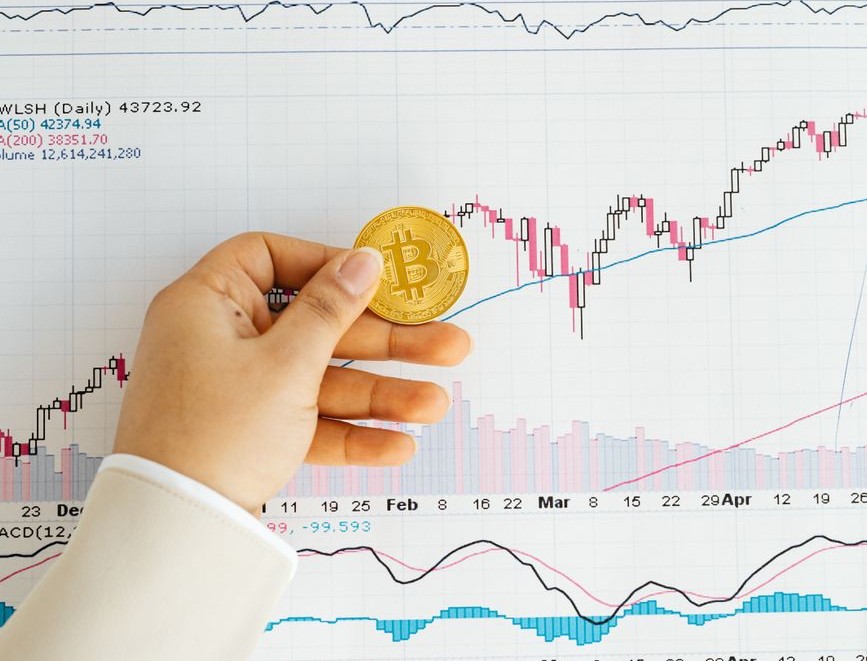
Smart money in cryptocurrency refers to institutional investors, hedge funds, and professional traders with substantial resources and market experience. While their large transactions can heavily influence liquidity, price action, and market structure, tracking smart money provides useful market signals rather than guaranteed predictions. Understanding these capital flows helps traders interpret broader market dynamics and potential shifts in sentiment.
Part 6: Profit Taking in Cryptocurrency Trading
This article breaks down essential profit-taking strategies in cryptocurrency trading to help you secure realized gains, minimize emotional decision-making, and protect your portfolio from market reversals. Learn how to implement fixed targets, partial exits, resistance zones, and trailing stops to build a disciplined risk management framework and lock in returns effectively.
PART 5: RISK MANAGEMENT
Effective risk management is essential for long-term survival in volatile cryptocurrency markets. Capital preservation must always take priority over short-term profit maximization. By mastering core concepts like position sizing, stop-loss orders, strict leverage control, and emotional discipline, traders can effectively protect their capital from catastrophic losses and sustain consistent performance through changing market cycles.
Part 4: Common Technical Analysis Tools Every Trader Should Know (Contd.)
This article explores essential technical analysis tools used to evaluate markets and confirm trade setups. It covers Bollinger Bands for volatility, Fibonacci Retracements for pullbacks, Volume indicators for trend strength, the Stochastic Oscillator for momentum, and the ADX for trend intensity. Discover how combining these complementary tools with disciplined risk management improves overall market analysis and trading strategies.
Part 4: Common Technical Analysis Tools Every Trader Should Know (Contd.)
Discover the core technical analysis tools every trader needs to evaluate market trends and refine entry points. This article breaks down essential indicators, including trend lines, Moving Averages (MA), the Relative Strength Index (RSI), and Moving Average Convergence Divergence (MACD). Learn how these tools measure momentum, identify dynamic support and resistance, and signal potential price reversals to strengthen your trading strategy.
Part 4: Common Technical Analysis Tools Every Trader Should Know
Technical analysis relies on historical price action, trading volume, and market behavior to identify trends and trading opportunities across various asset classes. By combining key tools like candlestick patterns and support and resistance levels, traders can better gauge market sentiment, manage risk effectively, and make informed decisions to find high-probability trade setups.
PART 3: THE BROADER CRYPTOCURRENCY AND BLOCKCHAIN ECOSYSTEM

Beyond trading digital coins, cryptocurrency is merely one layer of a vast blockchain ecosystem that is actively reshaping modern finance, technology, and digital ownership. Expanding sectors from Decentralized Finance (DeFi) and smart contracts to Web3, AI, and real-world asset tokenization demonstrate that blockchain’s secure, tamper-resistant technology is fundamentally transforming global industries far beyond simple digital currencies.
PART 2: CRYPTOCURRENCY INSIGHT
The cryptocurrency market is a 24/7 digital marketplace driven by supply, demand, and high volatility. While the industry encompasses diverse sectors like DeFi and Web3, successful investing requires robust market analysis. Investors combine Fundamental Analysis to evaluate a project’s intrinsic value and Technical Analysis to study price charts, optimizing their entry and exit points.
Cryptocurrency Market Brief: Bitcoin Consolidation, Institutional Adoption and the Regulatory Shift Reshaping Digital Assets

The late July 2026 cryptocurrency market entered a cautious consolidation phase characterized by a risk-off environment. While Bitcoin held support amid spot ETF outflows and Ethereum sustained institutional interest, altcoins experienced highly selective recovery. Meanwhile, intensifying regulatory pressures highlighted by EU sanctions on HTX and the BitMEX shutdown, accentuate a structural shift toward compliance, transparency, and institutional integration.
PART 1: GLOBAL INSECURITY EFFECT ON THE CRYPTOCURRENCY MARKET
Global instability triggers risk aversion, driving investors from volatile cryptocurrencies to traditional safe-haven assets and causing sharp market declines. While critics highlight potential misuse, public block chains allow regulators to trace transactions. Ultimately, these digital assets have evolved from decentralized payment alternatives into complex investment vehicles, balancing their foundational vision with institutional speculation.