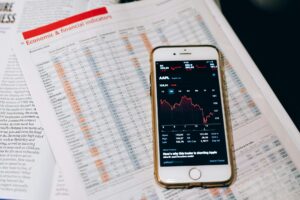


As the curtain closes on the first quarter of 2026, the cryptocurrency market finds itself at a fascinating and somewhat sober crossroads. The final week of March 2026 has been a microcosm of the year so far: a relentless tug-of-war between revolutionary structural shifts and a bruising macroeconomic backdrop. Even though the 2025 hype about prices “going to the moon” has died down, this past week shows the market isn’t crashing; it’s getting more resilient. Despite Bitcoin (BTC) remaining nearly 47% below its October 2025 peak, both BTC and Ethereum (ETH) traded range-bound, reflecting the market’s general subdued price action. However, the cryptocurrency ecosystem experienced a series of meaningful structural developments that reinforced its growing integration into the global financial system.
From the introduction of crypto-backed housing finance to the expansion of institutional custody into alternative tokens, alongside rising geopolitical concerns and selective corporate withdrawal, the period emphasized a critical shift. Crypto is no longer operating at the fringes of finance; it is increasingly embedded within it. Yet, with this integration brings a corresponding rise in complexity, risk, and regulatory attention.
The Battle for $67,000: BTC entered the final week of March under significant pressure. On March 26th, the price began a sharp descent from the $71,500 range, bottoming out near $65,500 as the market digested news of persistent geopolitical instability.
The “line in the sand” for bulls has been the $67,000 level. On March 30th, BTC witnessed a modest relief bounce that brought it back above this threshold, ending March 31st at approximately $67,789. However, the asset remains in a broad lateral range between $63,000 and $74,000, waiting for a catalyst to break the macro-deadlock.
The Utility Hedge: ETH’s performance has mirrored BTC’s caution, but with a focus on its role as the “settlement layer” for new financial products. After dipping below the psychological $2,000 mark on March 27th, ETH managed a recovery to $2,050 by April 1st. The narrative for ETH remains tied to its transition into a “yield-bearing” institutional asset, though it continues to trade in a sideways corridor.
This price behaviour reflects a market influenced less by directional conviction and more by positioning dynamics, particularly within derivatives markets.
In a landmark move for real-world asset (RWA) tokenization, Coinbase announced on March 26th that it is bringing token-backed down payments to the housing market. By allowing buyers to leverage their on-chain assets as collateral for mortgages without liquidation, Coinbase is attempting to solve the liquidity trap that has long kept crypto-wealth out of the traditional property market. However, it also introduces new forms of risk, particularly as household balance sheets become increasingly sensitive to crypto market volatility.
Also on March 26th, the regulated crypto platform Anchorage Digital announced it is bringing Justin Sun’s Tron (TRX) to U.S. institutional investors. This move reflects a gradual broadening of the institutional investable universe beyond BTC and ETH, although it also raises questions about asset quality differentiation as more tokens enter regulated frameworks.
A sobering report released on March 30th highlighted the persistent “double-edged sword” of digital assets. The report detailed how crypto fuels drone purchases for Russia and Iran, bypassing traditional sanctions through decentralized networks. This development has reignited the “anti-money laundering” (AML) debate in Washington, potentially casting a shadow over the regulatory progress made earlier in the year.
In a surprising retreat for retail crypto adoption in Latin America, MercadoLibre’s fintech arm, Mercado Pago, announced on March 31st that it is terminating its proprietary cryptocurrency, Mercado Coin. Originally launched as a loyalty play, the termination suggests that even the largest e-commerce players are finding it difficult to maintain private tokens in an era dominated by regulated stablecoins and BTC.
Geopolitical Undercurrents and Regulatory Implications: Perhaps the most sensitive development of the period is the growing evidence of cryptocurrency’s role in geopolitical financing, reinforcing concerns about the misuse of decentralized financial systems. While such developments do not immediately disrupt market pricing, they carry significant long-term implications.
The neutrality of blockchain networks, long considered a foundational strength, is increasingly becoming a point of regulatory tension. As a result, market participants should anticipate heightened scrutiny, tighter compliance requirements, and a more assertive regulatory stance globally. These dynamics may ultimately shape the trajectory of institutional adoption more than short-term price movements.
As we move into Q2, the market movement is coiled like a spring in the near term. We anticipate heightened volatility as U.S. tax season selling competes with positive sentiment from the “Hong Kong Web3 Carnival.”
The most probable near-term scenario remains one of range-bound movement that reflects a market that is neither lacking in liquidity nor conviction, but one that is awaiting clearer signals before committing to a directional move. With the “Extreme Fear” currently permeating the market is often a contrarian indicator, but in 2026, macro-reality is the captain of the ship. We are in a “show me” market where real-world utility is fighting for the narrative against geopolitical risk. Stay grounded and keep your stops tight.
By: Sandra A. Aghaizu
The market sits like a spring, tightly wound, waiting for a reason to release.
On one side, hope presses forward, whispers of adoption and easing tensions could send it snapping upward, lifting toward the light and pulling along with it.
On the other side, pressure builds, regulation, conflict, and tightening policy threaten to force it downward, testing how much weight the spring can bear before it dips.
For now, it neither breaks nor bursts. It holds.
A market not without strength, not without belief, but one that waits for proof before it chooses its direction.