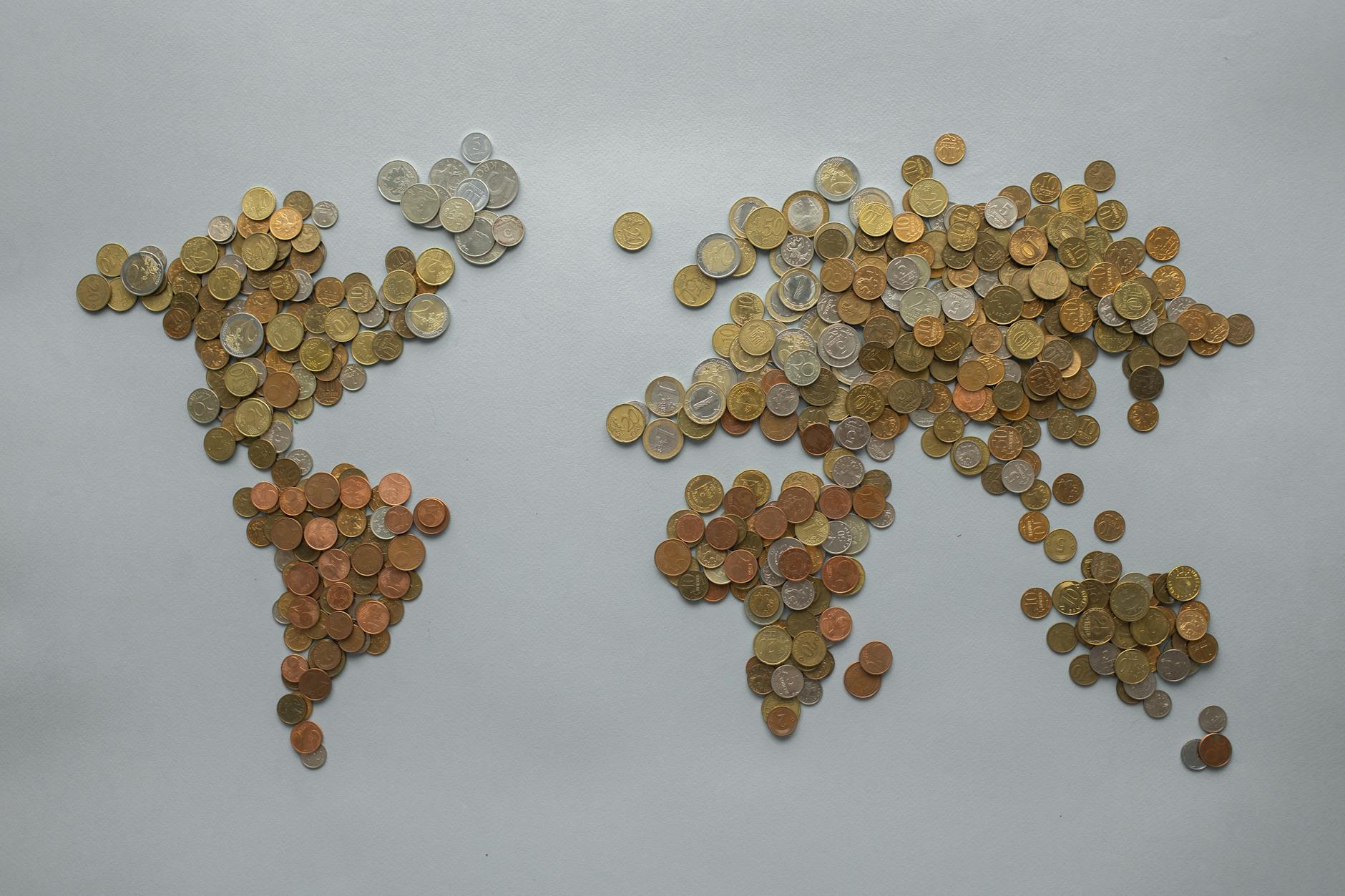
There is a quiet consensus forming beneath the surface of global optimism, and it is far less reassuring than headline growth numbers suggest. From the polished corridors of Davos to the policy-heavy discussions at the International Monetary Fund (IMF) Spring Meetings, one message is becoming increasingly difficult to ignore: the global economy is not stabilizing; it is fragmenting.
The Misleading Equilibrium
At first glance, the numbers offer comfort. The IMF projects global growth at 3.10% for 2026, a recent downward revision from to 3.30%, suggesting resilience in the face of tightening financial conditions and geopolitical uncertainty.
However, this equilibrium is misleading. While growth is holding, it is doing so evenly. Beneath the surface lies a widening divergence between economies, sectors, and access to capital.
The New Reality: Controlled Fragmentation
Davos 2026, convened by the World Economic Forum under the theme “A Spirit of Dialogue,” provided a stage for cooperation but revealed a system struggling to coordinate. The era of harmonised globalization is giving way to something far more complex: a world defined by strategic blocs, selective partnerships, and competing economic agendas.
Trade is no longer governed by efficiency alone, but by alignment. Supply chains are being redrawn, not for cost optimization, but for geopolitical security.
This is not deglobalization. It is controlled fragmentation.
The implications are already visible:
- Capital is becoming more selective.
- Trade routes are becoming more political.
- And risk, once largely economic, is now deeply geopolitical.
Markets are no longer reacting solely to inflation prints or central bank signals; they are responding to conflicts, alliances, and policy fractures. In this new order, geopolitics is not a background variable; it is the primary driver.
The Artificial Intelligence (AI) Divide
Alongside this shift is the rapid ascent of AI, emerging as both a growth engine and a fault line. Advanced economies are aggressively channeling capital into AI-driven productivity, positioning themselves for the next phase of economic expansion.
Yet this acceleration is uneven. For emerging markets, the risk is not just disruption, but exclusion. The ‘AI divide’ threatens to reinforce an already widening gap in global economic outcomes.
This asymmetry is reinforced by the IMF Spring Meetings, resilience is becoming concentrated in advanced economies, which benefit from capital depth and technological leverage, while developing markets face rising debt burdens with limited fiscal flexibility. This is where the real risk lies, not in collapse, but in imbalance.
Debt and the End of Cheap Capital
Debt sustainability, though less visible in market headlines, is fast becoming the defining constraint for many economies. As interest rates remain elevated, the cost of servicing debt continues to rise, eroding fiscal space and limiting policy responses. For frontier markets, this creates a threatening feedback loop: tighter global liquidity triggers capital outflows, which in turn amplify currency pressures and refinancing risks.
The message from policymakers is unequivocal: rates may ease, but they will not return to the ultra-loose conditions of the past decade. The era of cheap capital has ended, replaced by a disciplined investment environment that rewards credibility, stability, and reform.
Strategic Imperatives for Emerging Markets
For economies like Nigeria, this shift is both a warning and an opportunity. The global capital pool is not disappearing; it is becoming increasingly discriminating. Access will depend less on potential and more on policy clarity.
- Non-negotiables: Foreign exchange (FX) stability, fiscal discipline, and structural reform are no longer optional; they are prerequisites for participation in the next phase of global capital allocation.
- Commodity Strategy: While the persistence of geopolitical tensions ensures that commodities, particularly oil and gas, remain strategically relevant. This provides near-term support for resource-driven economies, but it is not a long-term strategy. The same global conversations that emphasize energy security also point toward transition. The window to convert commodity strength into diversified growth is narrowing.
Conclusion: The Need for Adaptability
What emerges from recent global gatherings is not a crisis narrative, but something more consequential: the global economy is not breaking; it is reordering. The old anchors of globalization, policy coordination, and abundant liquidity are weakening, replaced by a framework defined by fragmentation, selective growth, and persistent risk.
In this environment, success will not be determined by scale alone, but by adaptability.
- For policymakers: This means building resilience into economic frameworks, strengthening domestic revenue, stabilizing currencies, and maintaining policy consistency in an increasingly volatile world.
- For investors: it requires a lens shift, moving from broad market exposure to targeted, risk-adjusted positioning.
- For emerging markets: it demands urgency. The gap between reformers and laggards is widening, and the cost of inaction is rising.
The illusion of stability is perhaps the most dangerous takeaway from 2026. The system is holding, but only because it is adjusting in real time. Beneath that adjustment lies a deeper transformation, one that will define capital flows, growth patterns, and economic power in the years ahead.
The question is no longer whether the global economy will change, it already has.
The real question: who adapts fast enough to benefit from it?