
The Illusion of Stability: Davos, the IMF, and the Fracturing of the Global Economy
Trade is no longer governed by efficiency alone, but by alignment. Supply chains are being redrawn, not for cost optimization, but for geopolitical security.

Trade is no longer governed by efficiency alone, but by alignment. Supply chains are being redrawn, not for cost optimization, but for geopolitical security.

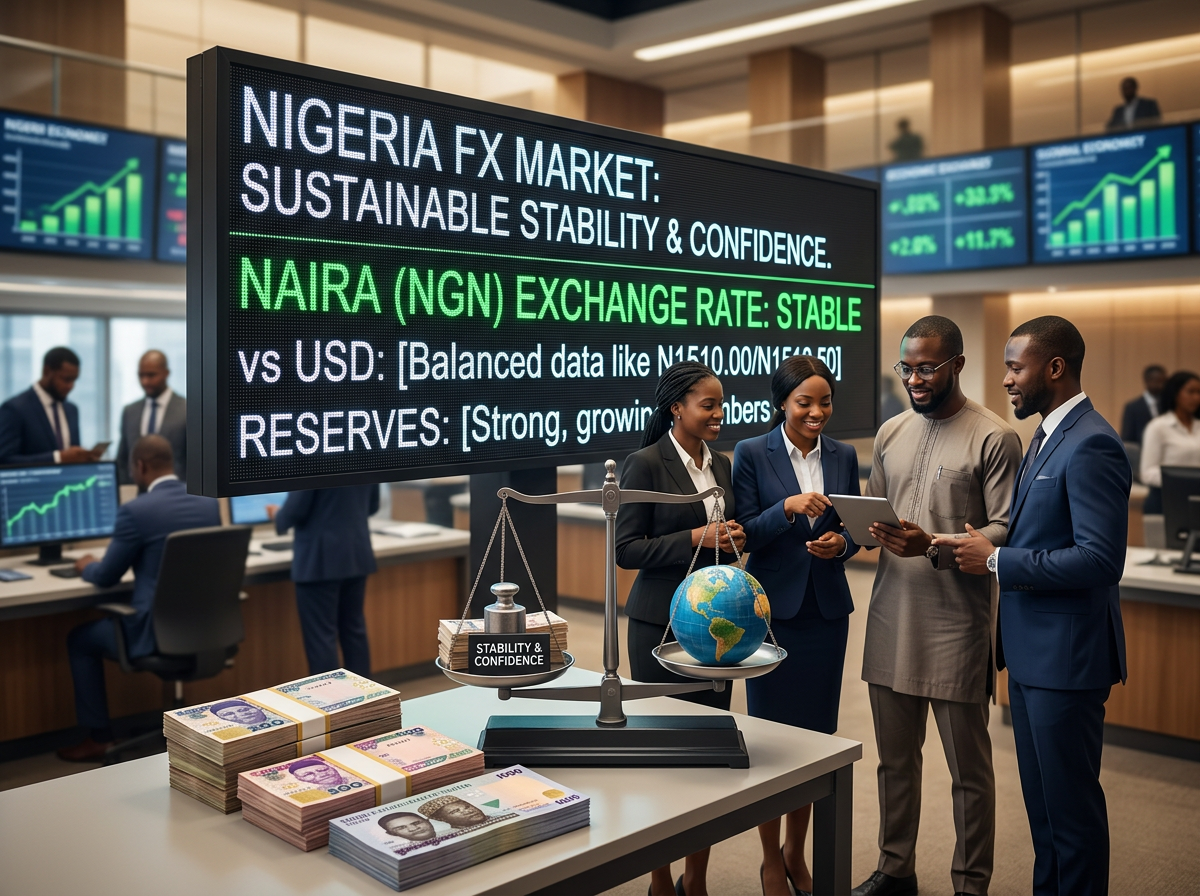
Money market rates were relatively stable, with the Open Repo Rate (OPR) steady at 22.00%, while the Overnight rate (O/N) opened at 22.23%, peaked at 22.29% before closing at 22.20%. In the currency market, Naira traded between $/₦1,340.00 and $/₦1,361.50, before closing at $/₦1,358.44 on Friday.

Rather than extreme volatility, the period was defined by structural repositioning, driven by institutional inflows, evolving regulatory discourse, and shifting liquidity conditions. As of the latest positioning, BTC is testing upper resistance, while ETH is building momentum toward the $2,400 pivot, placing the market at a decisive inflection point for Q2 2026.

The Nigerian financial markets traded through a week defined by resilient liquidity despite inflation-led repricing pressures and cautious risk-taking across asset classes. Interbank liquidity remained structurally strong, easing from a ₦4.79trn surplus to ₦3.84trn (-22.7% WTD), while money market rates stayed anchored with OPR steady at 22.00% and O/N oscillating around 22.16%–22.35%, reflecting sustained CBN liquidity sterilisation.

The week opened cautiously amid Middle East tensions and oil price volatility. However, early signs of geopolitical de-escalation triggered a relief rally that quickly evolved into a short-covering squeeze. With over $300 million in short liquidations occurring within hours, BTC reclaimed above the $74,000 level, reversing early-week losses, and market sentiment improved sharply, despite the Fear and Greed Index in Extreme fear.

Even as the Naira strengthened and equities edged higher, the message across markets was consistent, thereby illustrating a cycle that is no longer a panic-driven cycle, but one cautious repositioning, and capital is not fleeing risk, but repricing it with precision.

Analyst Note: A geopolitical thaw has sparked a “Peace Rally,” driving BTC above $70k as institutional flows and improving regulatory clarity signal a shift from defensive positioning to early-stage accumulation.

ESG is no longer peripheral; it is now evolving into the lens through which economic resilience, institutional credibility, and corporate competitiveness are being evaluated in Nigeria and globally…

Nigeria’s foreign reserves declined further from the end of March 2026 to April 1, 2026, easing from $49.48 billion to $49.18 billion, with a gross amount of approximately $300.34 million (-0.61%). Blocked funds mirrored the easing from $751.41 million to $743.14 million (-1.11%), and a blocked reserve ratio of 1.51%, displaying heightened external shocks and FX liquidity pressure.

Analyst Note: Macro crosscurrents and regulatory undertones continue to test near-term conviction, yet beneath the surface, institutional integration and selective capital rotation remain the dominant silent drivers, reinforcing a market structure defined more by accumulation than distribution.

Interbank liquidity opened the week at ₦8.15trn surplus, peaking at ₦8.87trn on Thursday, and declined to ₦5.93trn by Friday, marking a week-to-date decrease of 27.3%.

Analyst Note: Macro headwinds are testing market resilience, yet structural accumulation by institutional players remains the dominant “silent” narrative.