September 2026, Edition 3
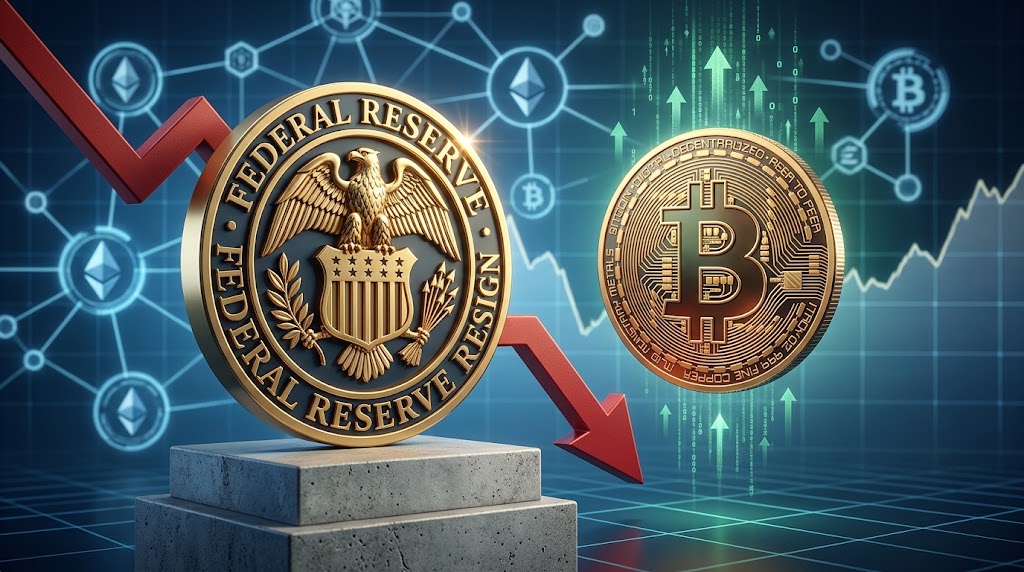
The U.S. Federal Open Market Committee (FOMC) voted unanimously (12-0) on September 16, 2026, to raise the target range for the federal funds rate by 25 basis points to 3.75%–4.00%. This marks the first interest-rate hike by the U.S. Federal Reserve since July 2023. In addition to Fed Chair Kevin Warsh’s comments, the immediate macro signal for crypto is relatively hawkish. The key point is not just the 25-basis-point hike, but the message that inflation remains a priority for the Fed and that further tightening is still possible. The Fed said inflation “remains elevated” and that the latest policy action is intended to support a timelier return to its 2% inflation target.
What Warsh's comments mean for cryptocurrency
- Rates were raised 25 bps: Negative pressure on risk assets, as higher borrowing costs can tighten liquidity and reduce the incentive to take risk.
- Economy is strengthening: Reduces the immediate need for monetary easing, particularly while economic activity and domestic spending remain resilient.
- Financial conditions aren’t restrictive: Suggests the Fed believes financial conditions can absorb additional tightening without becoming excessively restrictive.
- Inflation is still the main problem: Makes rapid rate cuts less likely and keeps the focus on maintaining restrictive policy.
- Strong commitment to 2% inflation: Supports the possibility of a “higher for longer” policy environment.
- More tightening remains possible: Creates downside/volatility risk for Bitcoin (BTC) and altcoins, particularly should markets begin pricing a longer tightening cycle.
Warsh specifically said the economy has strengthened while inflation remains the problem, reinforcing the view that the Fed is prioritising price stability even as economic activity holds up. The Fed’s latest dot-plot projections also indicate that further tightening remains on the table, with most policymakers projecting at least one additional rate increase in 2026.
Why this matters for Bitcoin and Altcoins
Think of it as a liquidity equation:
Higher rates → tighter financial conditions → less incentive to take risk → potential pressure on crypto.
Crypto, particularly altcoins and memecoins, are generally more sensitive to changes in liquidity and risk appetite than BTC.
However, it is important to note that market consensus expected the hike. Hence, the initial market reaction has been relatively controlled. BTC traded around the mid-$75K range after the decision and, as of early September 17, is currently trading around $76.5K, with limited immediate reaction to the hike.
So the market is now asking a different question: “How many more hikes are coming?”
Rather than simply: “Did the Fed hike?”
The biggest risk is the future path; this is where your interpretation of Warsh’s statement is important, with the following underlisted scenarios.
Should investors conclude: “One 25-bp hike, then we’re done.”
→ the crypto market could stabilize or recover as the uncertainty surrounding the decision fades.
Also, should investors conclude: “The Fed has started a new tightening cycle and could continue hiking because inflation isn’t falling fast enough.”
→ that would be more negative for crypto, especially high-beta altcoins.
The Federal Reserve’s September 2026 Summary of Economic Projections reveals a hawkish shift, lifting the median federal funds rate projection for the end of 2026 to 4.1% following a 25-basis-point increase that brought the active target range to 3.75%–4.00%. Driven by sticky inflation forecasts, 16 of 18 participating policymakers signalled a clear intention to enact at least one additional interest rate hike before the conclusion of the year, with a strong majority of 12 officials favouring one final quarter-point increase.
But there is another important factor right now
The Fed isn’t necessarily the only driver of crypto at this moment.
Recent CoinMarketCap Research noted that BTC’s short-term correlations with traditional assets had weakened significantly, suggesting that crypto-specific events could temporarily overwhelm the usual Fed/crypto relationship.
That means you shouldn’t interpret every BTC or altcoin move today as simply:
Fed hike = crypto down.
Other forces affecting the market simultaneously include regulatory developments, exchange-traded fund (ETF) flows, Treasury yields, the U.S. dollar, oil prices, and broader risk appetite.
The interesting part is that BTC has absorbed the initial shock relatively well. That doesn’t mean the Fed decision is bullish; rather, it suggests the hike itself was substantially anticipated by the market. BTC and Ethereum (ETH) initially swung around the announcement, while BTC subsequently remained near its pre-decision area.
Importantly, avoid the assumption that a hawkish Fed automatically means the beginning of a major crypto bear market. Market expectations, liquidity, dollar strength, Treasury yields, ETF flows, regulation, and crypto-specific catalysts can all influence the reaction.
In conclusion, K. Warsh’s message is currently more of a headwind than a tailwind for crypto because the Fed is signalling that inflation is still too high and that monetary policy may need to stay tight, but BTC’s relatively stable reaction suggests the hike itself was already largely priced in.