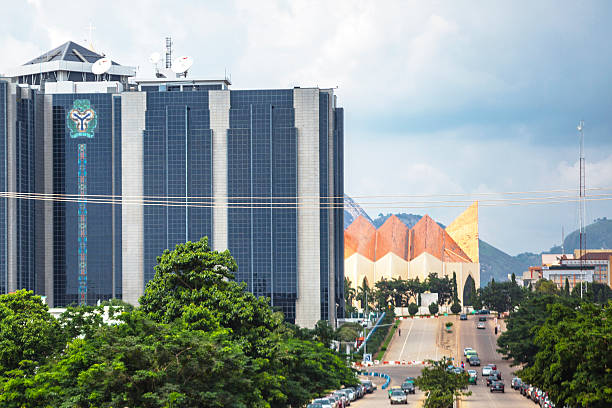
CBN 307th MPC Policy Decision Watch
The Central Bank of Nigeria (CBN) Monetary Policy Committee (MPC) delivered its largest policy-rate cut since the current tightening cycle began, slashing the Monetary Policy Rate (MPR) by 350bps from 26.50% to 23.00% at its 307th MPC meeting. The decision marks the strongest indication that Nigeria’s monetary-policy cycle is turning toward easing.
The Committee retained the Cash Reserve Ratio (CRR) at 45% for Deposit Money Banks (DMBs) and 16% for Merchant Banks, maintained the 75% CRR on non-TSA public-sector deposits, and kept the Liquidity Ratio at 30%. The asymmetric corridor was reset to +50/-300bps from +50/-450bps around the MPR, preserving the CBN’s ability to manage liquidity even as the policy anchor moves lower.
Why it Matters
This is not simply a lower policy rate. It changes the pricing of money across the financial system.
A lower policy rate should, over time, reduce the cost of funds and could create room for cheaper private-sector credit, supporting working capital, business expansion, consumer financing and productive investment. It also signals a stronger emphasis on monetary-policy transmission to the real economy, particularly through improved access to credit.
However, the unchanged CRR indicates that the CBN is not pursuing indiscriminate liquidity expansion. The Committee eased the policy anchor while retaining significant liquidity-management tools to control the pace and direction of monetary transmission.
For the fixed-income market, the repricing pressure is immediate. Nigeria Treasury Bill (NTB), Open Market Operation (OMO) bills, and Federal Government of Nigeria (FGN) bond yield curve now face a lower interest rate anchor, potentially driving yield compression and market reaction, as well as stronger demand for duration as investors lock in available returns before market yields adjust further.
Investors sitting on maturing OMO bills, Treasury bills, and government coupons now face a new question: where can returning liquidity earn sufficient yield?
That makes market inflows the next catalyst. OMO maturities, FGN coupons, and other sources of system liquidity could intensify reinvestment demand, particularly across longer-duration government securities.
The decision also carries a broader policy-signalling dimension as the rate cut points toward a more deliberate effort to translate monetary stability and ongoing reforms into economic activity and private-sector credit growth, while the recent Memorandum of Understanding (MOU) between the CBN and the Ministry of Finance (MoF) signals greater policy coordination between monetary and fiscal authorities.
Bottom line
The rate cycle has shifted. The 350bps cut lowers the policy anchor, but the bigger market story now moves to liquidity, yield compression, and capital rotation.
Importantly, the move represents the largest single MPR cut in the current rate-hiking cycle, which began in February 2024, when the MPR was increased by 400bps to 22.75% at its 293rd MPC meeting, before the subsequent tightening cycle pushed the policy rate materially higher under the leadership of Governor Olayemi Cardoso.
The immediate question is therefore not simply how low rates can go, but how effectively the lower policy rate will transmit into the real economy.
Watch OMO operations, NTB stop rates, FGN bond yields, system liquidity and foreign portfolio flows. What the CBN does with liquidity following today’s decision could matter almost as much as the rate cut itself.
For businesses and investors, the policy message is becoming clearer: the cost of money is being reset lower, but the speed of transmission will depend on liquidity management, banking-sector intermediation and the broader coordination of monetary and fiscal policy.